


Perspective / Slow systems
Fix or rewrite: how to decide when a system is slowing you down
Fix first, rewrite later. Most slowness sits in a few specific places, so a system health check is a cheaper, clearer first step than a rewrite.
Short answer: fix first, and rewrite only when the foundation is wrong. A rewrite resets everything the old system learned, and it delays the sales and operations you want to improve. Measuring a few key paths usually shows a cheaper and faster way out.
Signs you are stuck
- Checkout slows down on promotion days.
- A staff app freezes after a long shift.
- The hosting bill grows every month while traffic does not.
- The previous vendor left without documentation.
- Someone quoted a full rewrite, and nobody wants to decide.
Why a rewrite is rarely the first step
A rewrite takes months. During that time the old system still has to run and sales still happen. You pay twice, once for the new build and once for keeping the old one alive.
Most slowness sits in a few specific places. It can be a database query that scans too much, a page that loads too many files, or a background job that blocks the rest. Fixing those is far faster than rebuilding everything.
When a rewrite is the right answer
Sometimes the foundation is wrong. The data model cannot hold what the business now needs, or the authentication cannot be trusted. Patching these only adds more weight. In that case we say so, and we plan the rewrite in stages so the business keeps running.
When to do a system health check first
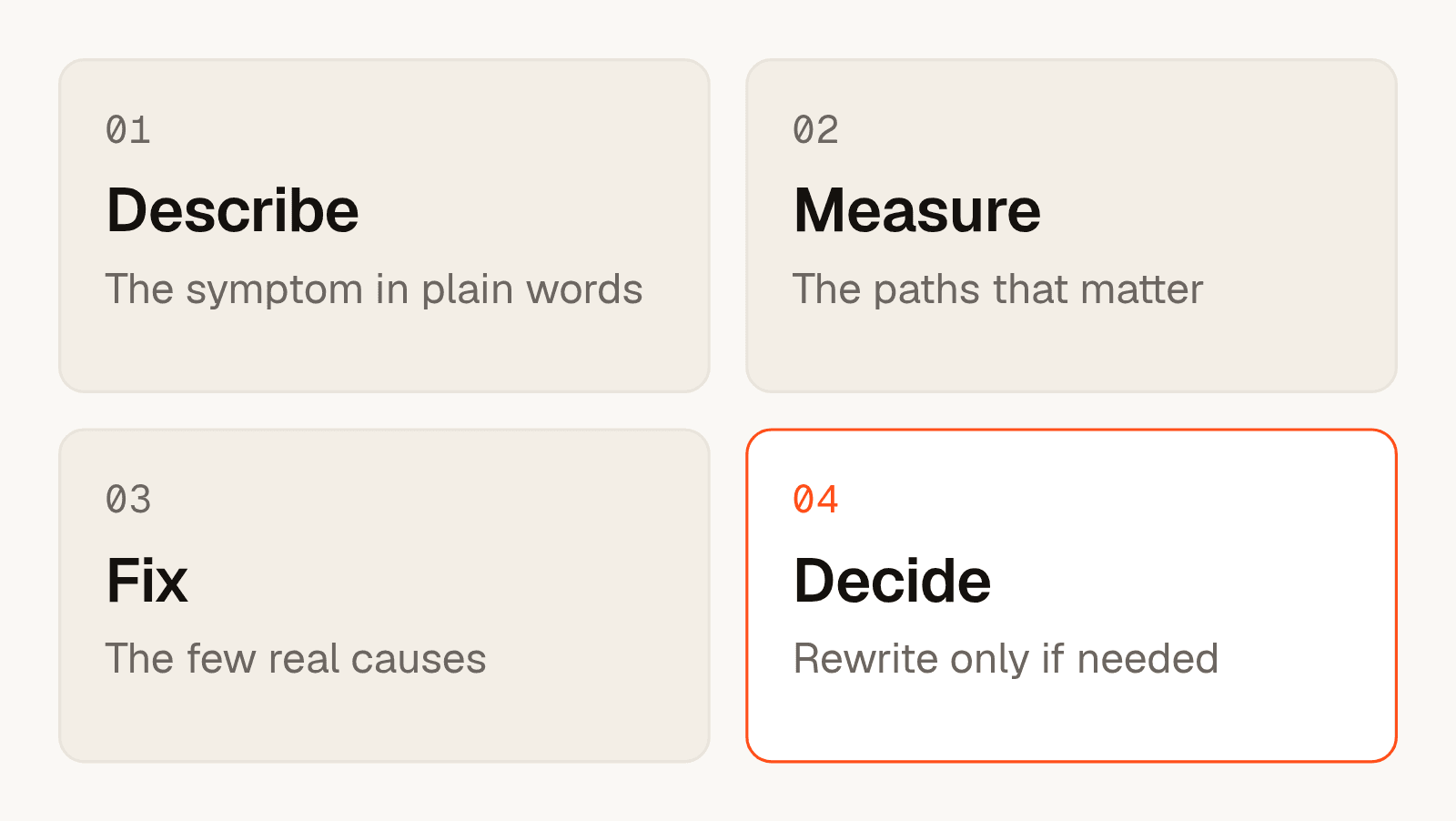
- You can describe the problem in plain words, for example: checkout spins for ten seconds at 8 pm.
- The system is live and earns revenue or runs operations.
- You can grant view-only access within days.
- You need a ranked list to report internally.
In one to two weeks we record baselines on the paths that matter and return a ranked list of causes. Each one has evidence and a fixed quote to fix it. Use the checklist before you book to prepare.
What a health check does not do
It does not replace round-the-clock monitoring. It does not replace load testing for a peak you have never had, and it is not a full security audit. Without access, we do not guess from screenshots.
The answer may be “no fix needed”
Sometimes the honest answer is that this is not a performance problem. It is manual work or a missing feature. Saying so early is part of the value.
Frequently asked questions
Should we rewrite a slow system?
Rarely as a first step. A rewrite takes months while the old system still has to run and sales still happen. Most slowness sits in a few specific places: a query, a heavy page, a background job. Fixing those is far cheaper.
What are the signs we are stuck?
Checkout slows down on promotion days. A staff app freezes after a long shift. The hosting bill grows every month while traffic does not. The previous vendor left without documentation. Someone quoted a “full rewrite” and nobody wants to decide.
When should we do a system health check first?
When you can describe the problem in plain words. When the system is live and earns revenue or runs operations. When you can grant view-only access within days. And when you need a ranked list to report internally.
What does a system health check do and not do?
In 1 to 2 weeks we record baselines on the paths that matter and return a ranked list of causes, each with evidence and a fixed price to fix. It does not replace 24/7 monitoring, load testing for a peak you have never had, or a full security audit. Without access, we do not guess from screenshots.
What does a system health check cost?
12M VND, excluding VAT, in 1–2 weeks. It is deducted from a Fix Package. The scope and the cost are in writing before your first payment.
Can the answer be that nothing needs fixing?
Yes. Sometimes the honest answer is that this is not a performance problem but manual work or a missing feature. Saying so early is part of the value.
Can I talk to someone first?
Yes. Book a free 30-minute call. You speak with our Founder or Solution Architect. We reply within one business day.